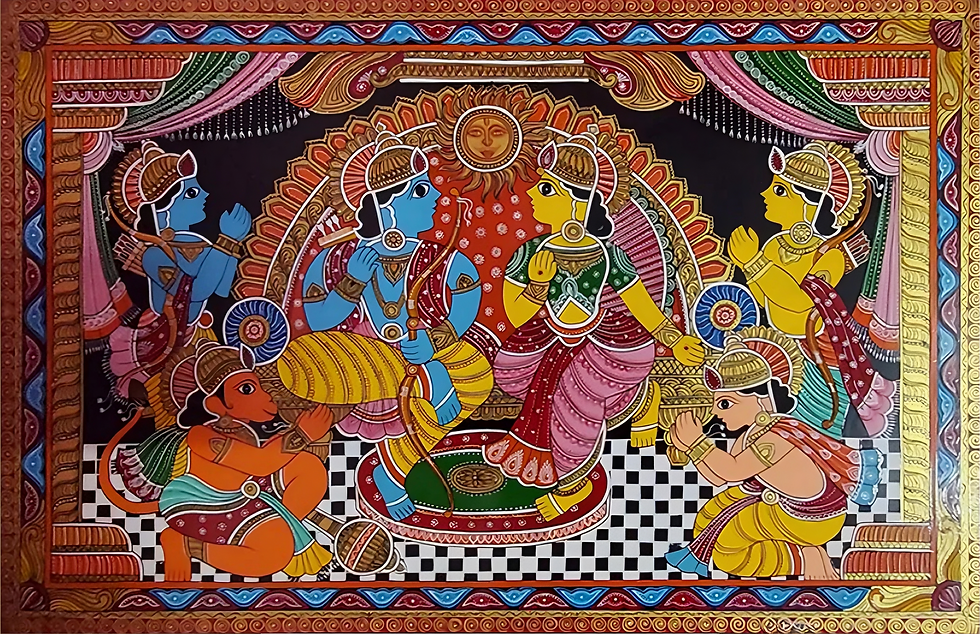
Tikuli Art
Intricate painted designs in vivid colour applied over enamel-coated hardboard, finished with gold accents and polished surfaces.
Tikuli art is a distinctive painting tradition from Bihar, taking its name from the decorative bindi historically worn by women, an ornament whose crafting became, over centuries, a sophisticated artistic practice. Its origins lie in the ornate bindis of the Mughal period, when intricate designs painted onto glass bases embellished with gold and silver foil became associated with royalty and elite households, drawing traders to Patna and Danapur.
Colonial economic shifts brought the tradition close to extinction by the early twentieth century, until a decisive revival in the 1950s led by artist Upendra Maharathi, who adapted Japanese hardboard painting techniques to create durable painted surfaces, transforming Tikuli from decorative ornamentation into a recognised painting tradition. Today, the works are characterised by polished enamel surfaces, fine detailing, symmetrical compositions, and vivid colour – bright reds, blues, greens, and gold depicting mythology, village life, festivals, and classical Indian narratives.